Ecological Stabilization Briefing

Three facts that, once understood together, change everything that follows.

Key Judgments

  • The biological systems that make human civilization possible are approaching irreversible collapse.
  • Ecosystem collapse precedes and forecloses climate recovery.
  • The primary driver of this collapse is land use for animal agriculture.
  • The remaining window to prevent cascading ecosystem failures is measured in years, not decades.
  • Existing policy and technological responses cannot move at the speed required to stabilize the system.
  • A global behavioral cascade — rapid adoption of plant-based diets through social diffusion — is the only intervention currently capable of operating within the available timeframe.
  • The early adopter population required to trigger that cascade already exists.
  • What determines whether the cascade accelerates in time is institutional alignment among those who shape perceived reality.

Before You Read Further

Most people who shape how the world understands itself — analysts, editors, scientists, policymakers, strategists — are working from an incomplete picture.

Not because they lack intelligence or commitment.

Because three critical facts have not yet converged in the same mind at the same time.

Once they do, everything that follows becomes obvious.


Fact One

Ecosystem collapse comes before climate collapse — and makes climate recovery impossible.

The global conversation about the future is dominated by climate change. Carbon. Emissions. Net-zero targets.

This conversation is real and necessary. It is also focused on a slower-moving layer of the crisis.

Ecosystem collapse — the failure of the biological systems that make food production, freshwater cycles, pollination, and climate regulation possible — operates on a faster timeline and through different mechanisms.

When an ecosystem collapses, it does not gradually degrade further. It transitions. Rainforests become savannah. Coral reefs become algae fields. Fertile soils become dust. These transitions are effectively irreversible on any timescale that matters to civilization.

This has a direct consequence for climate. Forests, soils, wetlands, and oceans regulate atmospheric carbon and global temperature. They are the biological infrastructure that stabilizes the climate system. When ecosystems collapse, those stabilizing functions disappear. Carbon stored for millennia is released. Weather systems destabilize. Hydrological cycles break down. At that point, every climate target becomes unreachable.

Fix the climate and lose the ecosystems: humanity inherits a biologically degraded planet at a stable temperature.

Lose the ecosystems first: there is no longer a climate to stabilize.

This sequence — ecosystem collapse preceding climate collapse — is the central fact that most global discourse still fails to recognize.
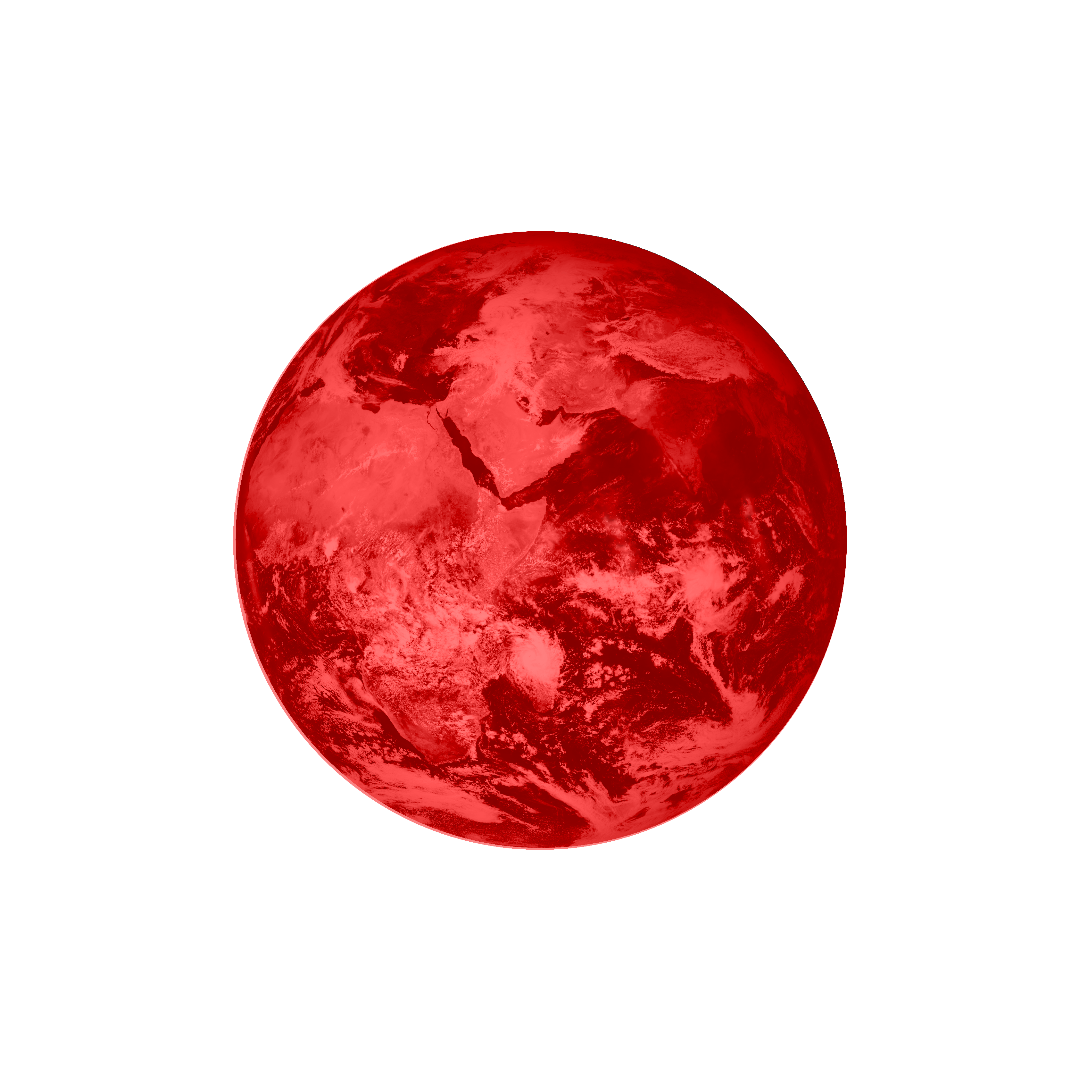

Fact Two

The window is measured in years, not decades.

In 2026, the United Kingdom's Joint Intelligence Committee — the body responsible for integrating intelligence from MI5, MI6, and the wider national security community — completed a national security assessment of global biodiversity loss and ecosystem collapse.

The report applies the same analytical frameworks used for nuclear risk and terrorism to ecological systems. Its conclusions are stark. Every major ecosystem is degrading. Many are approaching critical thresholds beyond which recovery will not be possible.

The threats are already materializing:

  • Crop failures and food insecurity
  • Water scarcity across multiple regions simultaneously
  • Extreme weather events intensifying in frequency and scale
  • Accelerating pandemic risk from biodiversity-driven disease spillover
  • Large-scale migration driven by ecological breakdown

The assessment describes what comes next, in sequence. Food insecurity expands. Migration follows. Organized crime and armed groups exploit resource scarcity. Political instability intensifies. Geopolitical conflict emerges over food, land, and freshwater. Every one percent increase in food insecurity drives a 1.9 percent increase in displacement.

These risks are not modeled for the end of the century. Multiple ecosystem thresholds are projected within this decade.

The World Economic Forum's global risk assessments now rank biodiversity loss among the most severe threats facing humanity within the next ten years.

This is not an environmental story. It is a civilizational stability story. And the phase we are entering is not the warning phase. It is the final window in which intervention can still change the trajectory.


Fact Three

The root driver is widely misunderstood — and so is the solution.

Industrial animal agriculture occupies roughly three-quarters of all agricultural land on Earth. It is the single largest driver of terrestrial biodiversity loss — identified as such in the UK security assessment, in the OECD's 2023 Feeding a Net-Zero World report, and in peer-reviewed research published in Science (Poore & Nemecek, 2018).

That research demonstrates that eliminating animal products from the global food system could free more than 75 percent of farmland while still feeding the world's entire population.

The land required to feed the animals humans consume is the primary pressure pushing ecosystems past their limits. This is the root driver.

Most policy discussions focus on carbon emissions, plastics, or deforestation as separate problems. But the dominant underlying mechanism is land use for animal agriculture. Without addressing this driver directly, the trajectory does not change.


Why Existing Responses Cannot Stabilize the System

Governments have identified the threat. What remains missing is identification of a solution that fits the timeline.

Policy mechanisms move slowly. Legislation, negotiation, implementation, and enforcement operate on multi-year cycles. Technological alternatives — including cultured meat and advanced protein production — may eventually contribute, but scaling new food systems globally takes decades. Incremental change — reduced meat consumption, sustainability certifications, voluntary commitments — cannot eliminate a driver operating at planetary scale.

The crisis is not waiting for gradual adjustment. Stabilization requires a mechanism capable of shifting behavior across billions of people within a few years.


The Mechanism That Can Move Fast Enough

There is one system on Earth capable of producing population-scale change within such a timeframe: human social diffusion.

Behaviors spread through social networks. When a visible minority adopts a new identity or norm, adoption can accelerate rapidly until it becomes self-sustaining. This process — diffusion of innovation — has driven every major population-scale behavioral shift in modern history.

The early adopters already exist. More than 600 million people worldwide currently follow plant-based diets. What determines whether this population triggers a global cascade is not awareness of the crisis. It is visible coordination among those who already understand what the evidence demands.

That coordination signal now exists. It is called #Plantist.


The Intervention

#Plantist is a global behavioral intervention designed to accelerate the transition to plant-based diets through social diffusion. It is deployed across 196 nations, grounded in diffusion-of-innovation science, and structured to be adopted rather than owned. There is no central spokesperson. Any individual, institution, or moral authority can adopt the framework.

A plantist is an individual who adopts a plant-based diet and identifies publicly with that commitment — not as a lifestyle preference, but as a recognition that human survival depends on ending the primary driver of ecosystem collapse.

The intervention requires no new technology, infrastructure, or treaty frameworks. It operates through the mechanism by which behavioral change has always spread: social contagion. The early adopter base already exists. What determines the speed of the cascade is whether those with influence speak clearly about what the science requires.


The Trajectory Without Stabilization

If the current trajectory continues, the sequence is well understood.

Now through the early 2030s
Continued expansion of animal agriculture compounds land use pressure. Biodiversity loss accelerates. Ecosystem degradation crosses critical thresholds in the most vulnerable systems — the Amazon, the Congo Basin, the Himalayan water towers, Southeast Asian coral reefs. These are not isolated losses. They are interconnected. Each collapse accelerates the others.
Cascading Ecosystem Failure
Pollination systems weaken. Soil fertility declines across multiple agricultural regions simultaneously. Freshwater cycles destabilize. Regional crop yields drop — not in one country, but across continents. The systems that regulate weather, water, and soil health are global. Their failure is global.
Food Insecurity at Scale
The populations most immediately affected are those already closest to the threshold. But global food systems are coupled. When production collapses in major agricultural regions, prices rise everywhere. Supply chains fracture. What begins at the margins reaches the center.
Security Cascade
Mass migration follows food insecurity at the documented ratio of 1.9 percent more people displaced per one percent increase in food insecurity. States under migration pressure experience political polarization. Organized crime moves into resource scarcity. Non-state actors gain leverage. Pandemic risk increases as biodiversity loss drives novel disease spillover. Geopolitical competition for arable land and freshwater becomes active conflict.
The Point of No Return
Once critical ecosystems have transitioned — once the Amazon is a savannah, once soil systems have crossed their thresholds — there is no restoration pathway on a human timescale. The carbon stored in those systems is released. Climate targets become unreachable. The conversation about recovery ends. What follows is not managed decline. It is systemic collapse, in which civilization's capacity to organize, produce food, and maintain governance degrades simultaneously, with no external stabilizing force.

Why This Briefing Exists

Most people who shape social reality still encounter the three facts described here separately. Rarely do they appear together. When they do, the implications become clear.

Ecosystem collapse precedes climate collapse. The timeline is measured in years. The root driver is animal agriculture.

Once those facts converge, the path forward is no longer ambiguous. The question becomes what individuals and institutions will do with that understanding.


The Window

The intervention is operational.

The early adopters exist.

The cascade begins when visible leadership removes friction for everyone else.

#Plantist is the coordination signal. Every visible adoption accelerates diffusion. Every aligned institution opens the field further.

The window is still open.

What happens next depends on whether those who understand the evidence act on it.


Website: plantist.org

Full intervention release: plantist.org/press/english/intervention

Alignment briefings by sector:

Intelligence communities  —  Editorial Institutions  —  Educational institutions  —  The United Nations  —  NGOs  —  Grassroots movements  —  Tech platforms  —  Governments  —  Industry  —  The Olympic Movement  —  Talent  —  Entertainment  —  Culture  —  Science

LinkedIn: linkedin.com/company/plantist